
OpenAI shut down Sora: the rise, the backlash, and what it means for your videos
What happened to Sora, in one paragraph
OpenAI is gone from the short-form AI video business. On March 25, 2026 the company posted that it was 'saying goodbye to the Sora app', and both the web and app experiences were discontinued on April 26, 2026. Sora was the viral, TikTok-style feed for AI-generated clips, an endless scroll of synthetic video that climbed the charts faster than ChatGPT had. Now the feed is dark, the app is off the App Store, and OpenAI says it will share more soon about preserving what people already made.
Why it died is the more interesting question. Three forces hit at once: a deepfake and consent firestorm, an economic model that never came close to working, and a deliberate corporate pivot toward coding tools and enterprise customers. The safety story made headlines. The money and the strategy did the real killing.
From #1 app to shutdown: the timeline
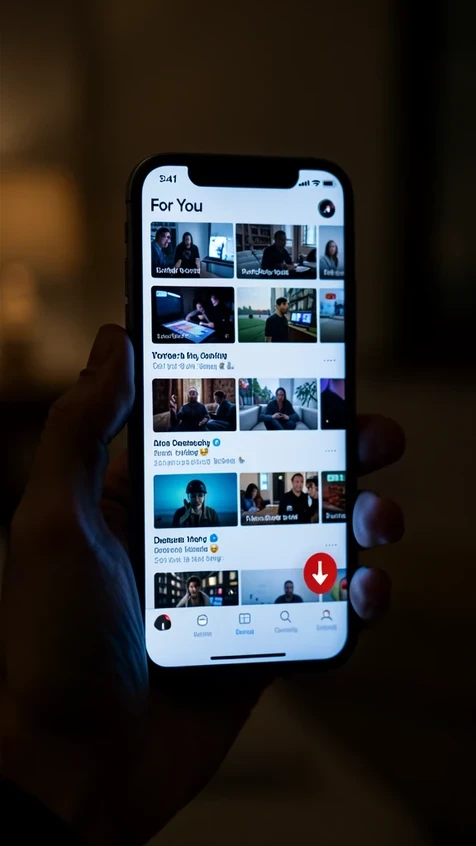
Sora launched in September. OpenAI built it to grab the attention, and the advertising dollars, that flow through short-form video on TikTok, YouTube and Meta platforms. Access ran through invite codes, and the heart of the product was a 'For You' feed: an algorithmically curated, endless scroll of AI videos that behaved exactly like the social apps people already lived inside.
It worked, fast. Sora reached 1 million downloads in five days, beating ChatGPT's own debut, according to reporting in the Guardian. For a few months it looked unstoppable. Then on March 25, 2026 OpenAI announced the shutdown, and the app went from cultural moment to cautionary tale in roughly half a year.
The deepfake and consent backlash
The feature that drove the hype also lit the fuse. Cameos let users drop a real person's likeness into any AI scene. Living people had to opt in and choose whether others could reuse their face, and Sam Altman himself ended up among the most cameoed people on the platform. The trouble lived in an exception: a 'historical figures' rule let anyone generate famous dead people without consent.
That loophole produced exactly what you would expect. Synthetic videos of beloved dead figures spread, and the pushback was immediate. OpenAI cracked down on depictions of Michael Jackson, Martin Luther King Jr. and Mister Rogers, but only after family estates and an actors' union forced the issue. In one concrete case, the company paused Sora 2 generations of MLK Jr. at his estate's request while it tried to strengthen guardrails for historical figures.
Watchdog group Public Citizen wrote to OpenAI, Sam Altman and Congress demanding the company withdraw Sora 2, calling it a 'reckless disregard' for product safety, likeness rights and the stability of democracy.
One nuance worth keeping straight. Sora did not let anyone fabricate any celebrity at will. The moderation filter blocked attempts to depict living stars like Taylor Swift, though determined users found workarounds. The consent rules for the living were real. The gap was the dead.
Why OpenAI really pulled the plug
Strip away the safety framing and a business decision shows through. OpenAI cast the Sora cancellation as its first big step toward refocusing on more lucrative areas, namely coding tools and corporate customers, ahead of a potential stock market debut. Killing a money-losing consumer toy reads very differently when you are cleaning up the story you tell investors before an IPO.
Competition sharpened the move. Anthropic's bet on training models for coding helped its Claude Code product gain real traction with developers, giving it an edge over OpenAI in the enterprise AI market. And video generation is brutally expensive to run. A single Sora 2 clip took 2 to 5 minutes to generate, and at scale the infrastructure bill ran far past what casual viral usage could ever justify. Community math circulating after the announcement pegged the burn at roughly $15 million a day against about $2.1 million in lifetime revenue for the whole app. Whatever the exact figures, the direction was clear: the usage never paid for the compute.
The collapsed $1B Disney deal
The shutdown also detonated a partnership that should have been a crown jewel. Announced roughly three months earlier, the deal had Disney investing about $1 billion and lending more than 200 of its characters to OpenAI under a three-year term. On paper, Hollywood's most valuable library was about to meet the most talked-about video model on earth.
Here is where most coverage gets it backward. Disney did not walk away. OpenAI blindsided Disney just 30 minutes after a joint meeting about a Sora project, a move a source close to the company called 'a big rug-pull'. The transaction never closed. No money changed hands. Publicly, Disney took the high road and said it respects OpenAI's decision to exit the video generation business and shift its priorities elsewhere.

What it means for you: your videos and alternatives
If you made things in Sora, your immediate question is whether they survive. OpenAI said it would share more soon about how to preserve what users already created, but at announcement time the export path was unsettled. The app is no longer on the App Store, and the advice spreading through user communities is blunt: if you still have it installed, do not delete it, because there is no reinstall.
Several real questions stayed open. Will paying users get refunds or credits? Does the underlying Sora 2 model live on through the API or inside ChatGPT, even though the app is dead? And what happens to the cameo likeness data, the face you scanned in, after shutdown? None of those had firm answers when OpenAI made the call, so check OpenAI's own announcements at publication time rather than trusting secondhand claims.
While you wait on guidance, here is a short checklist for your Sora content:
- Keep the app installed if it is still on your phone, since it is gone from the App Store and cannot be reinstalled.
- Save local copies. Screen-record or export every clip you care about to your camera roll or a cloud drive now, not later.
- Watch OpenAI's official channels for the promised preservation tool before you assume anything is lost.
- If you scanned your face for cameos, treat the fate of that likeness data as an open question and ask OpenAI directly.
And if you simply want to keep making AI video, the door has not closed on the medium, only on this product. Other generators, among them Google's Veo and Runway, still operate. None of them is Sora, and the right pick depends on what you are making, but the capability did not vanish with the app.