
Where AI Face Swapping Crosses the Ethical Line
AI face swapping is ethical when four conditions hold at once: the person whose face is used has consented, the intent is not deceptive, the manipulation is disclosed, and the distribution context causes no harm. It turns unethical the moment any one of those fails. The tool itself carries no moral charge. A swap shared between two friends who both agreed sits worlds away from a fabricated video built to wreck a reputation, even though the same app produced both. The rest of this article turns that principle into a usable test.
What makes AI face swapping an ethical question at all?
Face swapping becomes an ethical question because it does something ordinary photo editing never could: it drops a real person's likeness into a moving, believable scene they never agreed to. A deepfake is exactly that, synthetic media that uses AI to place someone into content they neither created nor consented to, convincing enough to pass as a genuine recording. The gap between looking real and being real is the root of the problem.
Humans are neurologically predisposed to trust what they see. Visual stimuli slip past much of the skepticism we apply to written claims, which is why a face-swapped video persuades faster and lodges deeper than the same lie set in text. An emerging academic field, visual ethics, studies precisely this. It pulls together journalism, cognitive science, visual arts, and philosophy to explain how people process and believe images. Deepfakes exploit a built-in human bias, and that is what separates them from text-based misinformation.
Speaking to Business Insider, David Attenborough said it was 'of the greatest concern' to him that AI could be used to make audiences believe he was saying things contrary to his beliefs.
His worry is not abstract. It names the precise harm: losing control of what your own face and voice appear to endorse. A public figure with decades of earned trust still has a personal stake in how his identity is represented, and so does everyone with far less to fall back on.
Underneath every face swap debate sits one tension. On one side, creative and expressive freedom, the right to make art, parody, and play. On the other, an individual's right to decide how their identity appears in the world. Ethics is the work of balancing those two, case by case, rather than declaring one of them the winner.
The five ethical tiers of AI face swapping
Rather than asking whether face swapping is good or bad, ask which of five tiers a specific use falls into. The tiers run from clearly ethical to clearly criminal, and almost every real scenario lands somewhere you can name on that scale.
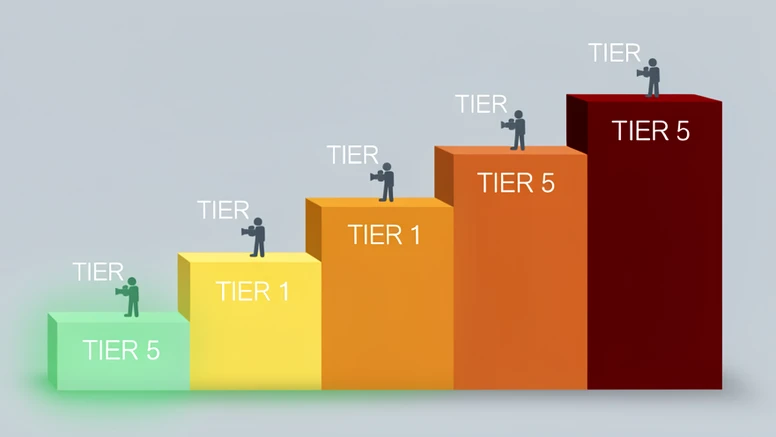
- Tier 1, consensual personal use: both people agree and the content stays private, such as friends swapping faces in a group chat. This is the clearest ethical zone there is.
- Tier 2, labeled creative or satirical content covers parody, art, and commentary where the AI manipulation is openly disclosed and the goal is to comment, not to fool anyone.
- Tier 3, commercial or public use without explicit consent: dropping a public figure's likeness into advertising or branded content with no authorization, which crosses a legal line in most jurisdictions.
- Tier 4, deceptive or reputationally harmful content: fabricated videos engineered to mislead audiences about what a person said or did.
- Tier 5, malicious deepfakes: non-consensual intimate imagery, fraud, blackmail, and political disinformation, the unambiguously criminal end of the scale.
Notice what decides the tier. Not the software. The same app can produce a Tier 1 swap and a Tier 5 one before lunch. Consent, intent, disclosure, and distribution context are the four variables that move a face swap up or down the scale, so ask about those before you ask about the technology.
Consent: the non-negotiable ethical baseline
Consent is not a checkbox. To mean anything it has to be explicit, informed, and ongoing. A vague 'sure, go ahead' said once does not license every future use, and silence never counts as agreement. Guidance from the Walton College of Business frames consent as a continuing process: the subject must understand how their image or voice will be used, and must keep the standing right to withdraw.
This is why 'it's just for fun' does not dissolve the obligation. A harmless-looking swap still takes a person's likeness without permission, alters it without their input, and may travel far past the people who first saw it. Good intent does not erase the autonomy question. It only changes the tier the swap belongs in.
There is a property dimension too. The right of publicity gives every individual legal control over the commercial use of their name, image, and likeness. You own your face as an asset, not only as a matter of dignity. Using it to sell something without authorization is both an ethical breach and, in most places, an illegal one.
Two practical duties follow. People should be able to revoke consent later if they grow uncomfortable with how their likeness is being used. And any content altered with deepfake technology should be labeled as such, above all where its authenticity could shift public opinion. Disclosure is not a courtesy. It is what lets an audience judge what they are looking at.
The scale of harm: what the data actually shows
The dominant real-world use of face swap technology is not memes or movie magic. Around 96% of deepfakes are pornographic, and the top four deepfake pornographic websites have together drawn over 134 million views, according to analysis published by the Observer Research Foundation. The overwhelming target is women, and the content is non-consensual intimate imagery: image-based abuse produced at industrial scale.
The Taylor Swift case made the failure of reactive moderation visible. Sexually explicit deepfakes of the singer spread across X, formerly Twitter, before the platform removed identified images and acted against the accounts behind them. By then the content had already reached a mass audience. If a celebrity with that level of resources cannot be shielded in time, an ordinary victim has far less.
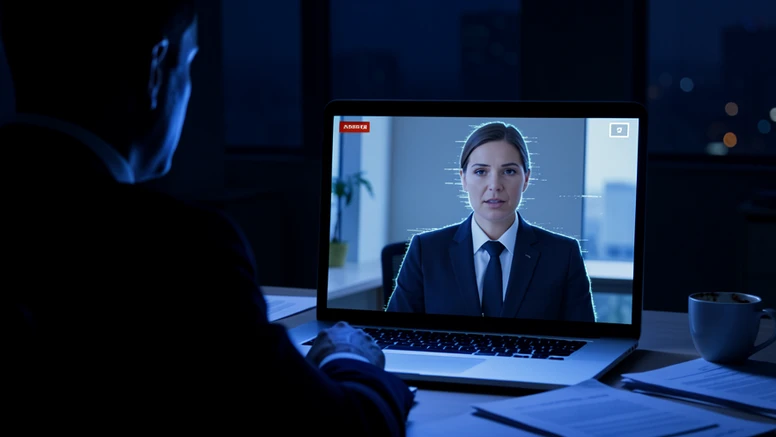
Harm reaches well past pornography and politics. In one case documented by the Walton College of Business, a finance worker at a multinational firm paid $25 million to fraudsters who used deepfake video to impersonate the company CFO and several colleagues during a live video call. The fake held up well enough to defeat a real employee's judgment in real time, which is the part that should unsettle anyone.
Cost is collapsing in parallel. Deepfake marketing videos for e-commerce platforms such as Taobao can be produced for roughly $1,100 and livestreamed around the clock. Commercial deception at scale is no longer the preserve of sophisticated actors with budgets. It is a line item almost anyone can afford.
Public unease tracks the trend. A 2023 survey found 67% of internet users worried about face swap tools being turned to identity theft and misinformation, and reports of face swap misuse in cybercrimes climbed roughly 20% over the prior year. Both figures come from analysis by Akool. The concern is not paranoia. It is a reasonable read of where the technology is heading.
The liar's dividend: a systemic ethical risk beyond individual harm
The liar's dividend is the flip side of deepfake panic. Once the public knows convincing fakes exist, any genuine recording can be waved away as one of them. The inconvenient truth becomes deniable, and that deniability is the dividend. Most coverage worries about fabricated evidence being created. This is the opposite danger, and it gets far less attention.
The payoff goes to the people who want to deny reality. As the Observer Research Foundation notes, the liar's dividend lets authoritarian leaders and bad actors discount real footage as 'fake news' whenever it threatens them. Fabrication is one weapon. Plausible deniability is the other, and it costs nothing to pick up.
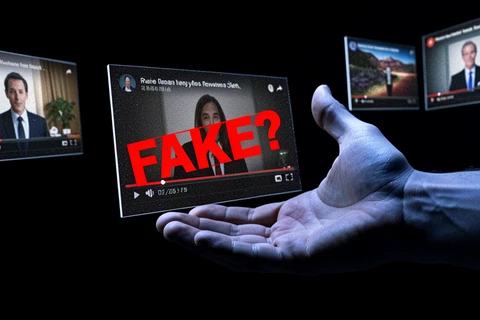
The deeper damage is to shared knowledge. When audiences can no longer reliably tell a real video from a synthetic one, video stops working as evidence at all. A courtroom clip or a leaked recording loses the presumption of authenticity it once carried. The erosion of epistemic trust is slow and quiet, and it touches every clip, not only the faked ones.
Experts saw this coming. In a 2018 Deloitte survey of 1,100 executives, the AI adopters who understood the technology best identified the use of AI to create falsehoods as its single greatest ethical risk, a finding documented by Loyola University Chicago's digital ethics program. The people closest to the tooling were the most alarmed by it.
Here is the unsettling part. This harm needs no malicious deepfake at all. An internet full of harmless, consensual, clearly labeled swaps still trains the public to doubt video by default. The cumulative normalization of synthetic media is itself the ethical cost, which means even Tier 1 use carries a faint systemic price tag.
Legal frameworks: what is actually illegal and where
Law reaches some face swaps and misses others. California offers the clearest examples of targeted legislation. AB 602 lets victims of sexual deepfakes sue the people who made them, and AB 730 restricts deceptive political deepfakes in the window around elections. Both are narrow by design, each aimed at one specific harm rather than the technology as a whole.
Likeness rights can outlive the person. In some US states, including Massachusetts and New York, the right to control commercial use of one's likeness extends beyond death. That opens a live question for synthetic resurrection: if a deceased actor's face can be licensed, who decides, on whose behalf, and for how long?
As a general rule, commercial use of another person's image without consent is illegal, while satire and parody enjoy free-speech protection. The HitPaw legal analysis stresses how unstable that line is: protection for commentary changes significantly from one jurisdiction to another, so what counts as lawful parody in one country may be actionable in the next.
The global picture is a patchwork. By mid-2023, over 30 countries had proposed or implemented deepfake-specific regulation, per Akool's review. Yet almost all of it targets a single harm at a time, most often sexual content or election interference. A unified legal framework that governs face swapping as a category does not yet exist.
Casual use sits in a legal blind spot. A face swap meme in a group chat, a joke video passed around between friends: the law has little to say, even when that content is later shared publicly without the subject's knowledge. Regulation has not caught up with the everyday way most people first meet this technology, which is exactly where the ethics still has to do the work.
Ethical gray zones: public figures, satire, and synthetic resurrection
Fame does not convert a face into public property. Public figures keep their likeness and publicity rights, which means a celebrity face cannot be dropped into an advertisement or a product endorsement simply because it is recognizable. Visibility is not a waiver.
Satire and parody are the next gray zone. They count as protected speech in most places, but the protection holds only when the content is clearly labeled and not built to deceive. Where satire shades into defamation depends on the jurisdiction, and creators routinely misjudge that boundary because it moves.
Then there is the question of the dead. Synthetic resurrection, recreating a deceased person's face and voice, asks something no one has answered cleanly: who controls that identity now? A handful of US states extend likeness rights past death, but globally the issue is unresolved, legally and ethically both.
Even consent does not settle every case. Consensual deepfake pornography still troubles ethicists, who argue it could normalize artificial pornography and affect psychological and sexual development. The Observer Research Foundation describes the ethics here as 'far more convoluted' than a simple yes from both parties, which is a useful warning against treating consent as the end of the analysis.
An upstream problem deserves attention too. The GAN models behind face swaps are trained on faces, often scraped from the open internet without anyone's agreement. The consent question begins before a single swap is ever made, and it stays largely unaddressed. Every output of those models inherits that unresolved debt.
Bias is built in, not bolted on. Facial recognition and face-swap training datasets are composed mainly of light-skinned subjects, which yields low error rates for them and much higher misidentification rates for people of color, as the Markkula Center for Applied Ethics at Santa Clara University has documented. This is a design flaw rather than a misuse, and it shows up even in entirely legitimate applications.
Legitimate and ethical uses of AI face swapping
Face swapping is not inherently harmful, and a fair account has to say so plainly. In film and entertainment it de-ages actors across decades, stands in for stunt doubles in dangerous shots, and enables posthumous performances when the performer's family consents to it.
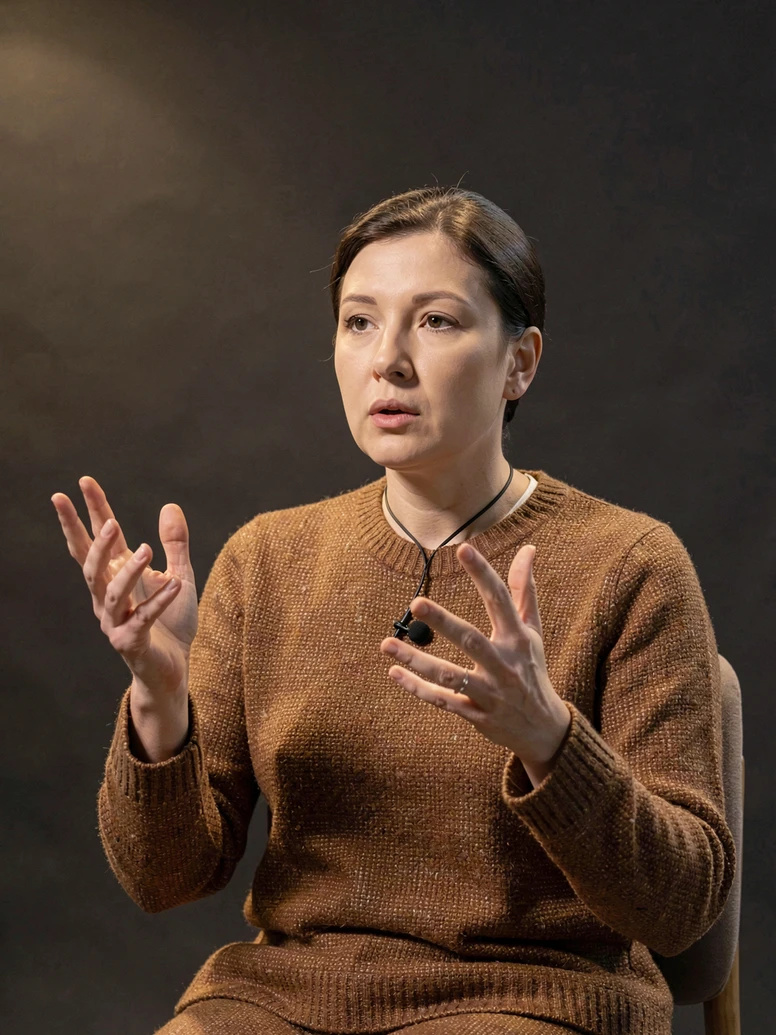
One of the most compelling ethical uses comes from research. A documentary team described on Reddit how it wanted to share the powerful testimony of vulnerable informants while hiding who they were, and asked whether face swapping could keep the gestures and body language intact while replacing the face. That is protection, not deception. It is the rare case where swapping a face shields the subject instead of exposing someone else.
- Education and accessibility work uses the technology to build diverse training datasets, run historical simulations for the classroom, and pair language lessons with native-speaker faces.
- Medical and therapeutic applications, such as visualizing facial reconstruction before surgery or supporting trauma therapy in a controlled setting.
What unites every legitimate use is the same triad of safeguards: explicit consent from the subject, clear disclosure to the audience, and no intent to deceive. Strip any one of those out and even a noble use case slides down the tier scale toward harm.
What ethical face swapping requires in practice
Ethical face swapping comes down to a short standard you run before creating anything, not after the content is already circulating. Treat the list below as a gate, not a wish list.
- Get explicit, informed, ongoing consent from everyone whose face appears, and document it so the agreement can be shown later.
- Disclose the AI manipulation in anything you distribute, above all where authenticity could sway opinion.
- Never use another person's face for commercial purposes without authorized consent.
- Leave IP-protected content alone: a film clip or a game asset may not be modified without permission from the rights holders.
- Ask which of the five tiers your use falls into before you start, and stop if the honest answer is Tier 4 or Tier 5.
Responsibility does not stop with creators. Tool builders carry an obligation to engineer real safeguards into their products, not just write prohibitions into terms of service. And detection cannot be the safety net. Although the number of deepfake detection tools has grown roughly 50% since 2020, detection is reactive by nature: harmful content reaches millions before it is caught, exactly as the Taylor Swift case showed.
Common misconceptions about AI face swap ethics
A few stubborn beliefs lead people straight into legal and ethical trouble. Each one sounds reasonable in the moment. Each one is wrong.
| Common belief | What is actually true |
|---|---|
| A public figure's face is fair game for any use | Public figures keep likeness and publicity rights. Commercial or deceptive use without consent can be illegal and stays ethically contested regardless of fame. |
| If a swap is just for fun and harms no one, consent is not needed | Even a benign swap takes a likeness without permission and may be shared without the subject's knowledge, which raises genuine autonomy concerns. |
| AI can detect deepfakes, so the problem fixes itself | Detection tools are growing but reactive. Harmful content reaches millions of viewers before it is identified and removed. |
| Consensual synthetic pornography is just another consensual fantasy | Ethicists call the issues 'far more convoluted' than consent, pointing to the risk of normalizing artificial pornography and harming psychological development. |
the part people skip is that it's four conditions at once, not pick one. consent + intent + disclosure + distribution context. fail any single one and a tier 1 swap becomes a tier 4 (the article frames it as a gate you run before, not after, which is the only sane order honestly)
tiers are fine on paper. in practice nobody runs a 5 tier checklist before posting a meme
yeah the gate thing assumes good faith. the people doing tier 5 stuff aren't reading this
what i actually wanted was which apps are even safe to use, article never names any
@1199 it deliberately doesn't, the whole point is the tool carries no moral charge. same app does a tier 1 and a tier 5 swap before lunch (their words), the variable is you not the software
the 96% pornographic stat is the only number that matters here tbh
96% pornographic and the top four sites pulled 134 million views combined per the ORF analysis. that's the real use, not movie de-aging
reading this on my phone and half these swap apps are mobile only anyway, the desktop ones feel way more locked down
@801 not really, the mobile ones just hide the scary settings behind a clean ui. the desktop GAN builds are where the uncensored output actually lives
didn't get the liar's dividend part
@1309 it's the flip side. once everyone knows fakes exist, a real video gets waved off as one of them. so genuine footage loses its weight even when nobody faked anything. authoritarian types love it, costs nothing to use
the 25 million cfo fraud one is wild. live video call and the employee still got fooled
right, that's the detail that should bother people. it held up in real time against a real person's judgment, not a doctored clip dissected after the fact but a live impersonation
fwiw on mobile the detection is basically nonexistent, ran maybe 23 swaps through a couple detectors on my old phone last month and they caught almost none
so is any of this actually illegal or not
patchy. california AB 602 lets sexual deepfake victims sue, AB 730 restricts political ones in the election window. but it's harm by harm, no law covers face swapping as a category. 30+ countries proposed something by mid 2023 and almost all target one harm at a time
sure, in a perfect world the law keeps pace
the casual meme in a groupchat sits in a total legal blind spot, article admits that much
yeah the everyday way most people first meet this, a joke swap in a chat, is exactly where the law says nothing. even when it leaks publicly later
tldr skipped most of it, did it say anything about cost? these getting cheap is the real problem imo
@801 1100 dollars for a taobao style marketing deepfake, livestreamed round the clock. that's the line you wanted. cost collapsing is half the point of the article
the bias bit surprised me more than the porn stat did
trained mostly on light skinned faces so misID rates jump for people of color, markkula center documented it. and it shows up in the legit apps too, it's baked into the dataset not bolted on as misuse
wait the training data itself is scraped without consent? so the problem starts before you even make a single swap
exactly, every output inherits that debt. GANs trained on faces scraped off the open internet, nobody agreed to any of it
honestly the attenborough quote does more work than the whole stats section
disagree, the liar's dividend point is the one that actually got me. fabrication is one weapon, deniability is the other and it's free
phone keeps mangling that comparison table, will reread on desktop tonight
ok but for someone just making parody clips, is labeling enough to stay legal or not
@1199 mostly. satire's protected speech in most places but only if it's clearly labeled and not built to deceive. where it shades into defamation moves by jurisdiction, so no clean yes
the 67% worried stat reads like every survey ever, people worry about everything
fair, but the 20% rise in reported misuse year over year is the one that isn't just vibes. both numbers are akool though so grain of salt
the synthetic resurrection question has no answer and that bugs me, who even owns a dead actor's face
has anyone actually run a detector on a swap made on mobile vs the same one rendered on desktop? curious if the output even differs
still don't get why detection can't just be mandatory at the app level...