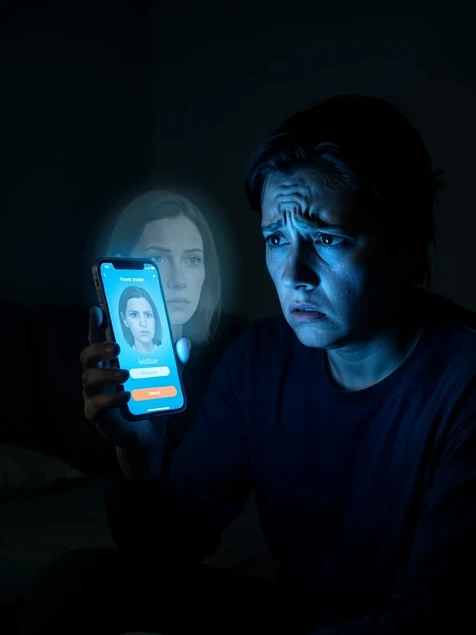
Deepfakes versus your selfie login: what actually gets through
Yes. In practice a deepfake can bypass ID or selfie verification, but not by perfectly beating the system. It only has to defeat the weakest of the checks standing in its way. And the genuinely hard part for a fraudster is not building a convincing fake face. It is getting that fake in front of, or inside, the verification stream without being caught.
That gap between making a deepfake and deploying one is the whole story. This page maps each attack to the exact check it targets, so you can judge how exposed your own logins really are.
Short answer: can a deepfake bypass selfie verification?
Conditionally, yes. A bypass succeeds when the attack finds one soft layer, not when the deepfake fools everything at once. Facia frames it plainly: most deepfake bypasses only need to beat the weakest of the three onboarding checks rather than all three together. So the question is never "can a deepfake beat verification?" but "which app, and which layer is thinnest?"
Here is the part that gets lost in the panic. Generating a believable face swap is now trivial. Presenting it to a live camera or injecting it into the video feed cleanly is where most attempts die. Regula Forensics makes the same point: because a deepfake is fully digital, the hardest job for the fraudster is presentation, not creation.
How selfie and ID verification is supposed to work
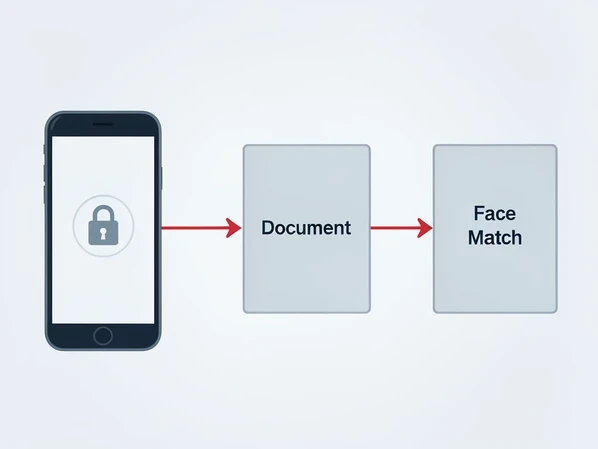
Selfie verification compares a live capture of your face to the photo printed on an official identity document, usually with liveness detection running underneath. DuckDuckGoose describes this as the standard onboarding and KYC flow: prove the document is real, prove a real person is present, then prove that person matches the document.
Pulled apart, onboarding runs three separate checks.
- Document verification confirms the ID itself is authentic and unaltered.
- Liveness detection asks whether a living person, and not a photo or screen, sits in front of the camera right now.
- Face matching scores how closely the live selfie resembles the document portrait.
Liveness is the layer most people misunderstand. It hunts for signs of life: a blink, a small head movement, natural skin texture, the way light reflects off a real face. Beat the thinnest of these three, and you are through. You do not need to beat all of them.
The two ways a deepfake gets in: presentation vs injection
Incode splits the attacks into two families, and the distinction matters more than any single statistic. One fights the camera. The other erases it.
A presentation attack shows a fake likeness to the real camera: a printed photo, a second screen playing a video, a looping clip, or a silicone mask. The lens still works, so anything that catches screen glare, moiré patterns, or flat depth has a shot at flagging it. Per Gartner research cited by Incode, presentation attacks are the most common route fraudsters take.
An injection attack is colder. It slips a virtual camera driver between the verification app and the physical lens, then feeds a pre-made synthetic stream straight into the app. Facia describes exactly this: the app never sees real video, only the signal handed to it. Incode estimates injection attacks rose around 200% in 2023. Rarer than presentation attacks, but far harder to spot, because nothing physical is ever shown to a sensor.
Jumio's VP describes the move as "digital injection": fraudsters insert pictures into a video stream to bypass the camera, which is why liveness tech now has to test whether images arrive directly from the camera at all.
You can see the curiosity in the wild. On Reddit, an Android modding user asks whether a rooted phone running a virtual-camera module and a face-swap tool could feed a liveness-compliant clip into Cash App, while openly noting that doing it on a real account is fraud. The mechanism is real. So is the criminal exposure.
Why blink-and-turn liveness checks don't save you
The comforting belief goes like this: the app told me to blink and turn my head, so a static fake can't pass. It is a myth. Those movements can be pre-recorded or generated on command.
Sumsub notes that a deepfake video can mimic blinking and nodding, often by swapping a victim's photo onto a moving clip. Picture a fraudster with one stolen profile picture and a short prepared video of blinks and nods. When a randomized challenge says "nod now," a responsive injected stream answers on cue. The challenge feels alive. The signal is fabricated.
Passive liveness has a different blind spot. It only judges whether a face looks alive, not whether the video itself is authentic. Facia points out that modern injected streams now carry real texture variation, micro-movement, and responsive motion, which is precisely what passive analysis is trained to reward. So the injected feed sails through, because the check was never built to ask where the pixels came from.
| Liveness type | What it checks | Where injection beats it |
|---|---|---|
| Active | Responses to prompts like blink, smile, turn | A responsive synthetic stream answers each prompt on demand |
| Passive | Whether the face looks alive from texture and motion | Injected video carries lifelike texture but a fake origin |
Why making the deepfake is the easy part
Creation has collapsed to almost no effort. Recorded Future found that dark-web actors recommend DeepFaceLab and Avatarify specifically because both are free, open-source, and need no advanced skill. Research cited on arXiv goes further: a usable deepfake can now be built from a single photo of a victim, like the profile picture sitting on a public account.
So if anyone can make one, why isn't every login already broken? Because deployment is the wall. Vendors who already catch on-screen images and physical masks are, by Regula's reasoning, well placed to catch deepfakes too, since the fake still has to be shown or injected somehow. The fraudster's bottleneck moved. It is no longer the face. It is the delivery.
Reality-check on the scary surge stats
The viral numbers are real, but they measure rates of change, not your personal odds of being fooled. Worth keeping straight before you panic.
- Sumsub's Q1 2025 research reported deepfake fraud surged 1100% in the United States, with synthetic identity document fraud up over 300%.
- Deepfake incidents in fintech reportedly grew 700% in 2023, per Realeyes.
- Recorded Future found specialized AI could detect counterfeits at only a 65% rate, so detection trails creation.
Read those carefully. A 1100% jump describes how fast reported incidents climbed, not the chance that your next login gets spoofed. The 65% figure is the one that should actually bother you: when detection misses roughly a third of counterfeits even under specialized analysis, the technology is visibly behind the people building the fakes.
Is your own selfie login safe? And is bypassing it illegal?
Depends entirely on how many layers your app stacks. A single-factor selfie-plus-liveness login is the soft target, because, as the arXiv research notes, widely available deepfakes can now carry features once unique to live faces. That is the exact case that motivates a second factor like camera authentication, which checks the signal's origin rather than how alive the face looks. Multi-layered defenses, including MFA, raise the bar an attacker has to clear.
If you only remember one self-check: ask whether your sensitive logins lean on a face scan alone, or pair it with a second factor. The first is the weak layer fraudsters hope for.
On legality, DuckDuckGoose is direct. Deepfakes are not inherently illegal. Using one to commit fraud or identity theft, including bypassing verification to open accounts in someone else's name, can bring criminal charges. The stakes are not theoretical. Sumsub documented a 14-person Vietnamese ring that laundered roughly US$38.4 million (VND 1 trillion) by using AI-generated face biometrics to defeat bank facial recognition. Years earlier, criminals wore a silicone mask of the French Defense Minister to steal EUR 55 million. Different tools, same lesson: the bypass is the crime.